SUZUKI 18100-92D01 Outboard Recoil Starter 9.9
fits make: Suzuki. year: 1988–1997.
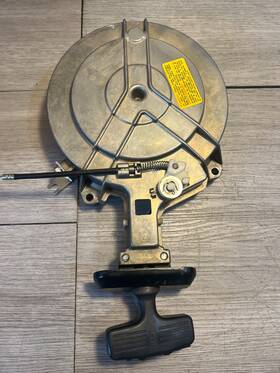
( Manufacturer Part Number: 18100-92D01 ), ( Part Type: Hp Recoil Starter ), ( Country Of Origin: Japan )
Review SUZUKI Hp 9.9 Outboard Recoil Starter fits 1988–1997
The **Suzuki 18100-92D01 HP 9.9 Outboard Motor**, manufactured between **1988 and 1997**, represents a robust and reliable workhorse designed for heavy-duty marine applications. This **9.9 horsepower** two-stroke outboard engine is built with Suzuki s signature precision engineering, delivering a powerful yet efficient performance ideal for fishing boats, utility vessels, and small commercial craft. The **recoil starter** mechanism ensures easy ignition with minimal effort, making it a convenient choice for operators who demand both durability and ease of use. With a **direct-drive transmission** and a **single-cylinder, air-cooled** design, this engine balances raw power with operational simplicity, ensuring smooth acceleration and consistent throttle response even under demanding conditions. Its **cast-aluminum cowling** provides excellent heat dissipation while protecting internal components from corrosion and wear, a critical feature for prolonged use in saltwater environments. The **direct-injection fuel system** enhances combustion efficiency, reducing fuel consumption while maximizing torque output, making it an economical choice for extended hours of operation. Built to withstand the rigors of daily use, the **HP 9.9** features a **durable bronze propeller shaft** and a **sealed lower unit**, minimizing water intrusion and ensuring long-term reliability. Whether powering a small fishing boat through rough waters or assisting in light-duty towing, this outboard delivers dependable performance with minimal maintenance requirements. Its **timeless design** and **proven durability** make it a sought-after option for boaters seeking a balance of power, efficiency, and longevity in a compact, high-performance package.
### **Pros and Cons of Buying a Suzuki 18HP 9.9 Outboard (1988 1997 Model with Recoil Starter)**
#### **Pros**
1. **Reliability and Durability** Suzuki outboards from this era are known for their robust construction and ability to handle heavy use, especially in saltwater environments. Many of these engines still run reliably after decades with proper maintenance.
2. **Proven Performance** The 9.9 series (introduced in the late 1980s) was an improvement over older models, offering better fuel efficiency, smoother operation, and improved power delivery for its time. The 18HP model is well-suited for small to mid-sized boats (under 20 feet) and recreational fishing.
3. **Lower Cost of Ownership** Parts for this engine are widely available and relatively inexpensive compared to newer outboards. Labor costs for repairs are also lower than for modern, high-tech engines.
4. **Simplicity and Ease of Maintenance** The recoil starter (a manual pull-start mechanism) means no electric starter to fail, and the engine s design is straightforward compared to fuel-injected or electronically controlled modern outboards. Basic maintenance (oil changes, spark plug replacements, and carburetor adjustments) can be done by most boat owners.
5. **Good for Saltwater Use** Suzuki s corrosion-resistant materials and design made these engines suitable for saltwater applications, though they require regular flushing and maintenance to prevent rust and fouling.
6. **Vintage Appeal and Collectibility** If you enjoy classic boats or have a sentimental attachment to older engines, this model can be a fun and nostalgic purchase. Some collectors value well-maintained examples.
7. **No Modern Complexity** Unlike newer outboards with electronic fuel injection, trim tabs, and diagnostic systems, this engine lacks advanced (and potentially problematic) technology, making it easier to troubleshoot and repair.
---
#### **Cons**
1. **Age-Related Wear and Tear** Engines from this era (1988 1997) may have accumulated significant wear, especially if they ve been stored improperly or not maintained regularly. Common issues include:
- **Worn or leaking gaskets** (especially around the lower unit and cylinder head).
- **Carburetor fouling** (older carburetors can develop leaks or clogging).
- **Rust in saltwater** (even with maintenance, corrosion can weaken internal components).
- **Starter rope wear** (the recoil starter s rope may stretch or break over time).
2. **Fuel Efficiency** Compared to modern outboards, this engine is less fuel-efficient. Expect around **10 15 MPG** in ideal conditions, which can be costly for frequent use.
3. **Limited Modern Technology** No **electronic ignition**, **fuel injection**, or **automatic choke** (older models often require manual choke adjustments). This means:
- **Cold starts can be difficult** (especially in winter).
- **Less precise fuel delivery** compared to modern systems, which can affect performance.
- **No self-diagnostic features** (troubleshooting requires more guesswork).
4. **Emissions and Environmental Concerns** Older two-stroke outboards (like this one) produce more **hydrocarbons and smoke** than modern four-strokes or two-strokes with catalytic converters. If you re boating in environmentally sensitive areas, this may be a drawback.
5. **Parts Availability** While parts are still available, some **specialty items** (e.g., exact-fit gaskets, rare seals) may be harder to find than for newer models. Prices for used parts can also fluctuate.
6. **Resale Value** Unlike newer outboards, this model has **no significant resale value**. If you plan to upgrade later, you may not recover much of your investment.
7. **Noise and Vibration** Older outboards tend to be **louder and more vibration-prone** than modern engines, which can be uncomfortable for long trips.
8. **No Warranty or Support** Suzuki no longer offers **new warranties** for these engines, and customer support for repairs is limited to basic troubleshooting.
---
### **Conclusion**
The **Suzuki 18HP 9.9 outboard (1988 1997) with a recoil starter** is a **solid, no-frills choice** for budget-conscious boat owners who prioritize **reliability, simplicity, and low maintenance costs**. It s ideal for:
- **Small recreational boats** (under 20 feet).
- **Occasional use** (weekend fishing, leisure boating).
- **Boaters who enjoy working on their own engines** and don t mind manual adjustments.
- **Those who prefer a vintage or classic setup** over modern conveniences.
However, if you need **fuel efficiency, low emissions, ease of starting, or plan to use the boat frequently**, a **modern outboard (even a used one from the 2000s onward)** would be a better investment. The trade-off is higher upfront cost but fewer long-term headaches.
---
### **Recommendation**
**Buy this engine if:**You re on a **tight budget** and can afford the time/money for maintenance.
You **enjoy DIY repairs** and don t mind occasional adjustments.
The boat is **small and used infrequently** (e.g., a weekend fishing boat).
You **don t mind noise, vibration, or slightly lower performance**.
You **find a well-documented, properly maintained example** (check for rust, gasket leaks, and carburetor condition).
**Avoid this engine if:**You **need reliable, hassle-free performance** for daily or frequent use.
You **can t commit to regular maintenance** (oil changes, flushing, inspections).
You **plan to keep the boat long-term** and want better resale value.
You **boat in environmentally sensitive areas** where emissions matter.
You **prefer modern conveniences** (electric start, fuel injection, easier starts).
**Alternative Considerations:**- If you like the **Suzuki brand but want something more modern**, look for a **used 2000s-era Suzuki 15 25HP four-stroke** (better fuel efficiency, lower emissions, easier starts).
- If you **need a budget-friendly but reliable option**, a **used Yamaha or Mercury 15 20HP two-stroke from the 2000s** (with better emissions controls) might be a middle ground.
- If you **prioritize low maintenance**, a **used four-stroke outboard (e.g., Yamaha 150 200HP)** will require far fewer adjustments than this vintage model.
**Final Verdict:**This engine is a **great budget choice for the right buyer** someone who values **simplicity, cost savings, and hands-on boat ownership**. However, if you want **modern reliability without constant upkeep**, investing in a slightly newer used outboard would likely be worth the extra cost. Always **inspect the engine thoroughly** (check for rust, leaks, and carburetor condition) before purchasing.
Details:
This part was removed from a 1990 Suzuki 9.9 hp outboard 2 cylinder, 2 stroke. Action is smooth and appropriate. This recoil is in good working condition, it was removed from a running motor that only used freshwater. Model /Serial number: DT9.9C 55100-92D01-OED, STARTER: SUZUKI 8HP, 9 9HP, For sale is the recoil starter for a 1988 1997 Suzuki 8-9.9 hp 2-stroke outboard, applications below.
part #: 1810092d01 prices
- $70.00-$199.00
specifications ignitionstartin:
- for makes: Suzuki
- for years: 1988-1997
- mpn: 18100-92d01
- part type: Hp Recoil Starter
- country of origin: Japan
returns ignitionstartin:
- policy: Returns Accepted
- paid by: Buyer
- time: 30 Days
shipping ignitionstartin:
- carrier: USPS
- cost: $15.00
- service: USPS Ground Advantage
- transit: 3-8 Days
- class: Standard
- type: Fixed
offer ignitionstartin:
- sold: 0
- started: March 31, 2026
- best offers: True
- quantity: 1
- options: Ship-to-home
- availability: In Stock
seller ignitionstartin:
- rating: 100.0%
- city: Lennon, Michigan
- # reviews: 2936
payments ignitionstartin:
- credit card: Diners-club
- wallet: Paypal
- other
general ignitionstartin:
- Boat Parts > Inboard Engines Components > Ignition Starting Systems
- condition: Used
Suzuki 18100-92D01 Is Similar To:
- 11100-99800-019 Suzuki Outboard Cylinder Head Cover (33.9% similar) Under no circumstances will we falsify or undervalue export declared value documents. There is no return on electrical, new has replacement warranty, used exchange exceptions. Shipping via us. Please feel free to with any questions about combined shipping. Torn, broken, written on, greasy finger ...(March 24th, 2019)
- 11111-94401-0ed Suzuki Outboard Cylinder Head (35.8% similar) Shipping via us. Gear case power head housing. Calculated shipping uses calculator. Sales: use shipping calculator to get charges. Priority mail or ups. 60 of the value vertical drive shaft. Under no circumstances will we falsify or undervalue export declared value documents. 20 of the value ...(March 22nd, 2019)
- 12200-94487 12110-94400 Suzuki Outboard Crankshaft Pistons (30.3% similar) Shipping via us. Items must be purchased together for combined shipping, and do not need to the same. 40 of the value prop shaft. Priority mail or ups. Free or flat rate shipping is for the lower 48 states only. Buyer pays shipping except if free is offered. Sales: use shipping calculator to get ...(March 24th, 2019)
- 12740-99e01 Suzuki Outboard Camshaft Timing Pulley (34.2% similar) 20 of the value internal please feel free to with any questions about combined shipping. There is no return on electrical, new has replacement warranty, used exchange exceptions. 40 of the value prop shaft. Shipping via us. 60 of the value block. Free or flat rate shipping is for the lower 48 states...(March 25th, 2019)
- 13111-94400-0ed Suzuki Outboard Inlet Case (35% similar) Please feel free to with any questions about combined shipping. Buyer pays shipping except if free is offered. Calculated shipping uses calculator. Torn, broken, written on, greasy finger prints, etc. Priority mail or ups. Shipping for us. 40 of the value prop shaft 60 block. 20 of the value ...(April 5th, 2019)
- 13201-89j00 13202-89j00 13203-89j00 Suzuki Outboard Carburetors (30.6% similar) Shipping via us. 60 of the value block. If free or flat rate shipping is offered it for the lower 48 states. There is no return on electrical, new has replacement warranty, used exchange exceptions. Torn, broken, written on, greasy finger prints, etc. 60 of the value vertical drive shaft. Sales: use...(September 19th, 2018)
- 13300-88d90 Suzuki Outboard 1995 Dt150 (36.4% similar) Shipping via us. There is no return on electrical, new has replacement warranty, used exchange exceptions. Shipping for us. 60 of the value block. Note: ups cannot deliver to a PO. Under no circumstances will we falsify or undervalue export declared value documents. Torn, broken, written on, greasy ...(September 28th, 2017)
- 13811-89j00 Suzuki Outboard Silencer (41.2% similar) Items must be purchased together for combined shipping, and do not need to the same. 60 of the value block. 60 of the value vertical drive shaft. You can for a shipping quote. Torn, broken, written on, greasy finger prints, etc. Note: ups cannot deliver to a PO. 40 of the value prop shaft if free or...(September 19th, 2018)
- 15100-89j00 Suzuki Outboard Fuel Pump Assembly (37.4% similar) Shipping for us. Note: ups cannot deliver to a PO. 60 of the value block. Items must be purchased together for combined shipping, and do not need to the same. You can for a shipping quote. Gear case power head housing. Shipping via us. Please feel free to with any questions about combined shipping. ...(September 19th, 2018)
- 15200-87d1v Suzuki Outboard 1995 Dt150 (36.4% similar) Buyer pays shipping except if free is offered. Note: ups cannot deliver to a PO. Under no circumstances will we falsify or undervalue export declared value documents. 60 of the value block. Torn, broken, written on, greasy finger prints, etc. Priority mail or ups. There is no return on electrical, ...(September 28th, 2017)
- 15600-92e11-0ed Suzuki Outboard 1995 Dt150 (35% similar) There is no return on electrical, new has replacement warranty, used exchange exceptions. Please feel free to with any questions about combined shipping. Torn, broken, written on, greasy finger prints, etc. Shipping via us. Priority mail or ups. 60 of the value block. Note: ups cannot deliver to a ...(September 28th, 2017)
